Be yourself; Everyone else is already taken.
— Oscar Wilde.
This is the first post on my new blog. I’m just getting this new blog going, so stay tuned for more. Subscribe below to get notified when I post new updates.
REVV TILL RED
Be yourself; Everyone else is already taken.
— Oscar Wilde.
This is the first post on my new blog. I’m just getting this new blog going, so stay tuned for more. Subscribe below to get notified when I post new updates.

6-MIN READ

Arjit Garg | News18.comArjit_GargUpdated:August 22, 2019, 11:38 AM IST


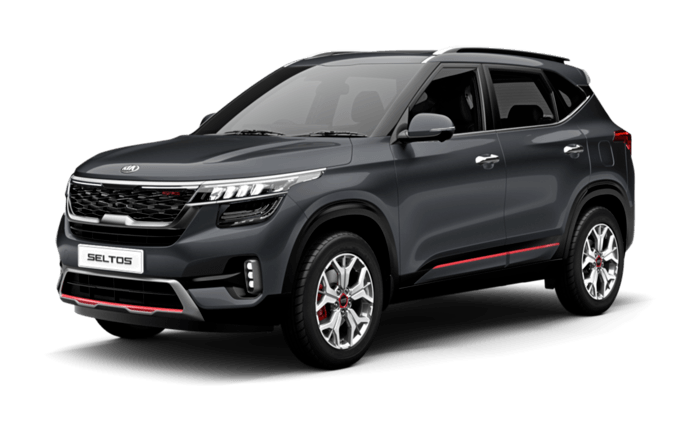
While there are several new brands and cars coming to India, the latest car joining the mid-SUV segment is the Kia Seltos, a new car from a new brand in India and probably the most important one to launch this year too. Reason being, Kia Seltos garnered more than 6,000 bookings in just 24 hours of announcing the pre-bookings, bringing a ray of hope for the Indian automotive industry, which is going through the worst slump in years. With every new product launch in the SUV space, the design gets better and premium. Gone are the days when SUVs were meant to look muscular. Cars like the Kia Seltos perfectly balances the muscle with proportionate and eye catching design. The Seltos is available in two trims, Tech line and Sports line and there are few visual changes between the two, with GT being the sporty one having red accents throughout the body.
6-MIN READ
Arjit Garg | News18.comArjit_GargUpdated:August 22, 2019, 11:38 AM IST
It’s The Perfect Time To Invest Online: Read Moreolymp tradeOlymp Trade Helps Me Make Money Right From My Smartphoneolymp trade
While there are several new brands and cars coming to India, the latest car joining the mid-SUV segment is the Kia Seltos, a new car from a new brand in India and probably the most important one to launch this year too. Reason being, Kia Seltos garnered more than 6,000 bookings in just 24 hours of announcing the pre-bookings, bringing a ray of hope for the Indian automotive industry, which is going through the worst slump in years. So what makes this car so attractive to the buyers and how good it is to drive, we tried to answer all these questions during our first-drive review of the Kia Seltos in Goa.
WATCH VIDEO
Design
With every new product launch in the SUV space, the design gets better and premium. Gone are the days when SUVs were meant to look muscular. Cars like the Kia Seltos perfectly balances the muscle with proportionate and eye catching design. The Seltos is available in two trims, Tech line and Sports line and there are few visual changes between the two, with GT being the sporty one having red accents throughout the body.
Upfront is a radically different looking face with the signature Tiger Nose grille, LED headlights which Kia has named Crown Jewel and LED DRLs called the Heartbeat DRLs. The vertically stacked fog lamps are called Ice Cube led lamps. At the side are the large wheel arches, roof rails, floating roof, and dynamic body lines, giving Seltos the visibility.
There are 17-inch alloys, with different design in both the trims. However, it’s the Y-shaped crystal cut alloys on the GT line that looks brilliant. At the back are the extended tail lamps connected via a chrome plate that gives it a wider look, along with the skid plate. Since it competes in the mid SUV space, comparison with Hyundai Creta is inevitable. Dimensions wise, the Seltos is both longer and wider than the Creta. Move inside the cabin and you will be taken aback by the design and layout. There are a variety of trim options right from an all-black theme to dual tone and more. The overall layout remains the same with a cockpit inspired design. The highlight, of course, is the large horizontally placed 10.25-inch touchscreen infotainment system that’s intuitive to operate. The system adjoins the instrument cluster having a 7-inch digital display and looks modern.
In terms of features, the Seltos is loaded to the brim with many features some of which are segment-first and also India-first. The features include a 8-inch heads up display, Bose speakers with ambient lighting, air purifier, inbuilt perfume diffuser, inbuilt rear sunshade, 8-way adjustable seats, tyre pressure monitoring system to name a few.
The Kia Seltos is the 3rd car in India after Hyundai Venue and MG Hector to get a connected tech called UVO meaning your voice and has 37 features. The UVO app can be used to control functions like remote engine start/ stop, door lock/ unlock, voice based commands and remote vehicle status among others. Kia has partnered with Vodafone to provide Connectivity solutions along with many other tech companies like MapMyIndia and LG.
Practicality wise, the Kia Seltos has ample space both at the back and front, easily accommodating 5-full grown adults. There are also enough spaces to keep your stuff and the door pockets are huge. The boot is very deep and wide with 433-litres of space.
What’s missing in the Seltos is a panoramic sunroof, which the competition is offering, and a powered tail gate. The plastic quality, especially on the roof mounted buttons is also questionable. All in all, the Kia Seltos has the best cabin design and features list, not only in its segment, but at least a couple of segments above.
Not only is the Seltos feature rich, it’s also mechanically rich. Kia has added a variety of engine and gearbox options in the Seltos to cater a wide audience and growing demand of the buyers. To be precise, there are 3 engine options and four gearbox options combined to form 16 variant options. The one we drove during our first drive review was the 1.5-litre diesel engine with automatic gearbox.
Before talking about the driving experience, here’s a brief idea about the engine options. There’s a 1.5-litre petrol engine developing 115 PS and 144 Nm output mated to a either a 6-speed manual or a CVT gearbox. There’s the 1.5-litre diesel with 115 PS and 250 Nm output mated to a 6-speed manual and 6- speed automatic unit, the one which got to drive. And lastly, the talk of the town 1.4-litre turbo petrol producing 140 PS and 242 Nm and is mated to either a 6-speed manual or a 7-speed DCT. All the engines are BS-VI ready.
There are 3 drive modes – Normal, Eco and Sport and three traction modes – Mud, Snow and Sand to choose from, however there’s no physical knob to easily opt between these modes. There’s no all-wheel drive system either. Talking about the drive experience, the diesel engine had a minimal turbo lag with a linear delivery and a very good low end torque. The auto gearbox responded well with the engine and it was not difficult doing three digit speeds even on narrow Goan roads.
The flat bottom steering not only felt good to hold but also had a balanced feedback for city and highway driving. It was not difficult to take sharp turns, though it felt a bit heavier at times. The ride quality was fabulous and it felt like Kia had worked hard to tune suspension as per the Indian roads. We took the car through water clogged roads, broken patches and highway and the Seltos did not disappoint us.
The NVH levels were refined and no diesel clutter or instant acceleration noise seeped inside the cabin. The braking was confident too, and heavy rains didn’t affect the braking force much. In terms of mileage, Kia claims 16+ kilometers to a litre for both the petrol engines and 21 kmpl for the diesel engine with manual gearbox.
Safety wise, apart from the active safety systems like 6-airbags, ABS with EBD, Brake Assist, Hill Start Assist, there are also connectivity based safety features like the emergency assistance in case of an accident, Geofencing, stolen vehicle notification and immobilization. There’s also a first-in-segment 360 degree camera with a blind view monitor.
Overall, the Kia Seltos offers a very plush and balanced driving dynamics. Kia Seltos will compete against cars like Hyundai Creta, MG Hector and Tata Harrier in India and is expected to be priced starting at Rs 9 Lakh and going upto Rs 18 Lakh for the top spec GT model.
Kia Motors played a huge gamble by building a car from scratch and launching it in a segment dominated by the likes of Hyundai Creta and even cars like Tata Harrier and MG Hector recently. But it seems like the gamble has paid off. Not only is the Kia Seltos most feature packed car in the segment, it’s fun-to-drive and looks very good too. Being a newcomer, Kia will also play the price card quite aggressively. With over 20,000 bookings and 200 odd touchpoints, Kia Motors has come to India not only to survive, but to rule the market. Let’s hope we see more Tiger Nose grilles roaming on our roads, making India more synonymous to other South Asian countries.

Bentley insiders say its new, third-generation Flying Spur has taken the brand to an all-new level. This is not just because it is much more accomplished to drive now, but being driven around in the passenger seat is also a much nicer experience. So just how good is the new third-generation Flying Spur?
It certainly is imposing to look at, and part of that is down to the size. The new car is built on a 130mm longer wheelbase, and this 5.3m-long and 2.2m-wide car looks so long in the flesh, it seems like a stretched- out battleship. The new design has an even wider and more imposing grille at the front, round crystalline LED lamps sunk into its ‘bluff’ nose and plenty of high-quality chrome on the chin. Moving the wheels further out now gives it an even more planted look, and what makes it look more hunkered down is that it gets a tighter-fitting roof and muscular haunches; the latter now replete with sinuous lines. Even the rear is imposing and nigh on perfectly executed. The passenger cabin, for one, sits inset of the bulk of the car, and what adds to the imposing look is the ‘table-top’-like boot lid, with its crisply defined lines. Up front, the wings of the new Flying B mascot are opaque and illuminated, to celebrate 100 years of the brand being around. And the cool bit is, press a button and it now disappears into the ‘radiator’.
Under the skin, the new Flying Spur shares its MSB platform with the new Porsche Panamera, and, as a result, is much stiffer than the outgoing car. Now also 38kg lighter, it is powered by a 6.0-litre W12 engine, with the more compact length of the engine allowing the Bentley to have a relatively shorter nose. Twin turbochargers help the 6.0-litre engine put out 635hp and a pavement-crushing 900Nm of torque. It now also gets cylinder de-activation that makes this motor 15 percent more efficient. It has the requisite performance too. Use launch control and you can achieve a 0-100kph time of just 3.7sec – very quick for a car of this weight – and top speed achievable is 333kph. The Flying Spur also gets an 8-speed dual-clutch transmission that’s good enough to handle the massive torque of the engine, heavily rear-biased all-wheel-drive and three-chamber air suspension that now has 60 percent more air in the system than before. What helps the big 2.4-tonne car turn into corners faster is rear-wheel steering, and the new Flying Spur also gets a 48-volt active anti-roll bar system that keeps body roll in check. Also new is a torque vectoring system that gently brakes the inside wheels to help the car rotate in a corner. The dash of the new Flying Spur is similar to that of the Continental. Its party piece remains the revolving touchscreen that flips once and displays three chrome-ringed dials, or flips again to reveal a plain wooden panel. What also gets your attention is the quilted, three- dimensional leather finish on the door pads. Examine the dash closely and what hits you in the face is the incredibly high-quality levels – the perfectly finished lacquered wood, the tastefully executed chrome highlights and then, wherever you look, everything is draped in the highest quality leather. The wide expanse of wood on the dash and the centre console, in fact, looks more like a piece of Victorian furniture than a car interior. Does anyone do high-quality traditional interiors better than Bentley? The answer is no. While the interiors work well in general, functionality in some areas is less than ideal. Controlling fan speed, for example, is fiddly. As on many Audis, you need to hit a mode switch, select fan and then rotate a dial to either slow down or speed it up. . . something that’s near impossible to do safely when behind the wheel. And plastic quality on the steering wheel – something you touch and feel all the time – is similar to that of a VW or a Skoda; other buttons around the cabin are better built.
Comfort in the back is very impressive. Step into the rear and the seat height is just perfect, not too high not too low. And what helps ingress massively is that the doors open wide. The slightly longer wheelbase results in a bit more legroom, but I still feel there should have been a bit more, all things considered. The seat, however, is just superb. The backrest reclines a few degrees, the seats can be cooled, heated and will even prod you in the back or massage you if you wish. Cushioning is soft and sumptuous, the thick seats offer very good support on long drives and never sag, and what betters this is that shoulder, middle and lower back support are just super. The long seat base even offers you masses of thigh support. There’s no Pullman seat that allows you to stretch out completely, and the individual iPad-sized tablets, placed on the front seatbacks reduce rear passenger visibility, but what’s nice is that you get a new version of the removable touchscreen controller that’s placed above the rear vents and controls all manner of functions, including the lights, blinds, sunroof, and entertainment. What enhances comfort in the back is that the ride quality is brilliant. Select ‘Comfort’ on the chrome dial at the front and the car seems to just waft along over rough patches and undulations, the three-chamber air springs, adaptive dampers and slackened anti-roll bars doing their best to soak up the bumps. And that’s not it, Bentley has used a new bit of tech too – ride-height sensors, which also help in keeping the car flat over bumps. Despite this, there is a still bit of pitch on some of the less-than- perfectly paved roads, and what makes it worse is that there is no intermediate setting between ‘Comfort’ and ‘Sport’ to tighten up the suspension marginally. Still, ride in general is very pliant, and what makes the experience nicer still is that the suspension works in near silence – no thuds, thumps or ‘twacks’ getting through to the cabin.
The imperious manner in which the Flying Spur wafts along also makes it feel effortless to drive. A lot of this is down to the massive W12 engine that is near silent at speeds below 3,000rpm. And tap the throttle and the urge you get from the humongous 900 Nm of torque is so strong and effortless, driving it with even a light foot feels just addictive. Remember this is in Comfort mode, where the car is metaphorically loose-limbed and relaxed.
Ask it to sprint, in ‘Sport’, and the beast from under the bonnet truly comes alive. Squeeze the accelerator hard, engage all that heady performance, and it feels like a freight train has hit you in the back. Keep your right foot planted and it continues to accelerate at a rate that makes you hold onto your breath momentarily, the twin-clutch gearbox going from one gear to the next with only the slightest hiccup.
Expected in India around the middle of the next year at a base price of Rs 4.06 crore (ex-showroom), the new Flying Spur is right up there among the best cars in the world. Yes, slightly more legroom in the back would have helped, the brakes need more stopping power, and, for India, you will need smaller wheels. The new Flying Spur, however, remains a super luxury car that can do both – keep its passengers incredibly comfortable in the rear and also absolutely delighted from behind the wheel. Very, very few cars can do that; this clearly is one of the best Bentleys ever.
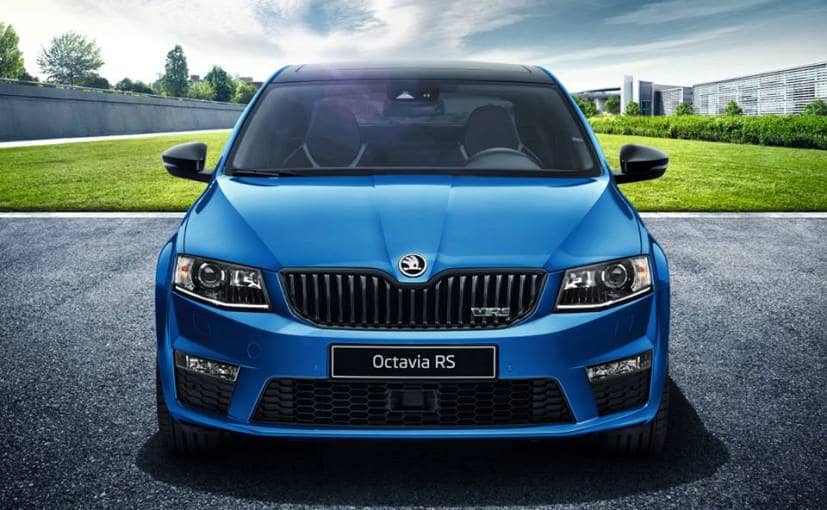
This is a hot hatch from the wrong end of the power spectrum. In an age when most C-segment performance variants have anything between 250- and 300hp, and we’ve even got hyper-hatches with 350-, 381- and 400hp, then the facelifted Skoda Octavia RS 230’s eponymous output looks like it is sorely lacking. However, overlook the Czech flyer at your peril, because it’s one of the sweetest hot hatches on the market today – and it comes with all the traditional Octavia strengths intact.
Inside, you’ll find the natty new steering wheel and some tasty, sculpted RS-branded sports seats, plus all the extra toys that make the 2017MY Octavia such an appealing proposition. But the RS petrol has also had a minor shot in the arm. Prior to the update, the normal TSI RS had 220hp from its 2.0-litre, four-pot turbo engine, while there was a special RS 230 model that benefitted from an electronically controlled limited-slip differential, some chassis and suspension tweaks and an additional 10hp – hence the ‘230’ moniker.
It’s going to get confusing from now on, you see, because the car test driven here is also the RS 230 and it also has 230hp, trimming two-tenths of a second from the old 220’s 6.9-second 0-100km/h time. But it doesn’t have the fancy differential at the front, nor does it wear the bigger wheels or special branding of a more powerful variant – that will be left to the impending RS 245, which will be the ‘old’ RS 230’s analogue. See? Told you it was a bit convoluted.
One thing that won’t be confusing for you when you drive the 2017MY Octavia RS 230 is just how blindingly brilliant it is. And you might even be wondering if that numeral in the name badge ought to read something more like ‘270’ or ‘280’, because this Skoda feels far more muscular and rapid than even the diff-equipped preceding 230 or the company’s quoted claims for its performance prepare you for. There’s a wonderful zing and clean, crisp roar to the ‘EA888’ 2.0-litre engine as it piles on the revs heading to its redline and the car feels enormously strong through the first four gears of the (admittedly slightly clunky) six-speed manual transmission. Pace is not something the RS 230 lacks.
Nor is chassis sharpness. Grief, this is a superbly balanced hot hatch, one that belies its ‘big family car’ origins with turn-in and grip that’s every bit as good as some of the leading lights in the segment, and that includes vehicles with considerably more on-paper power than the Skoda. In one particularly challenging corner, a well-timed lift of the throttle even saw the RS adopting a mildly oversteering stance, so there’s masses of throttle adjustability in the mix that will truly reward the keen driver. The steering is wonderful, better in this petrol car than its diesel sibling thanks to 25kg less weight at the nose, while body control is first rate and the brakes are beyond reproach.
And yet it still functions as an honest-to-goodness Octavia, blessing its occupants with a ride that’s tellingly firm but never uncomfortable (confession: we couldn’t discern much of a difference between the Skoda’s ‘Comfort’ and ‘Sport’ modes in the Dynamic Chassis Control adjustable damping, but as we liked both of them equally we’ll kind of gloss over this minor hiccup), restricting wind noise and tyre roar to mere background susurration, providing light and clear controls to make placing the Skoda accurately on the road a doddle. You know when people say something is a great all-rounder, by which they mean it’s good at many things but exceptional at none? That’s not the Octavia RS. The Octavia RS is clearly master of all its trades.
You can pick the diesel and you can option up the DSG transmission and you can have the wagon (we love estates normally…) if you absolutely must, but, for the purest Octavia RS experience going, simple is best. Manual, hatchback, petrol. Job, emphatically, done.

You’ll have read Hormazd’s exclusive review of the Cayenne Coupe in our 20th-anniversary issue two months ago. In it, he was quite taken with the immense performance of the 680hp/900Nm, V8-hybrid powertrain, and also its ability to whisk you along with a clean conscience in EV mode. He wasn’t as much a fan of the body style, however.
Hate it or love it, though, the sleek, slammed roof of a sportscar stretched over the chunky, wide base of an SUV is here to stay, and that’s why I’m driving the Cayenne Coupe again. What isn’t here this time around is the V8 Turbo S e-Hybrid powertrain. While that could come to India at a later stage, a pair of more conventional turbo-petrol engines will arrive first, and those are the ones we’re driving today. It’s hard to think of this non-hybrid V8 as the ‘lesser’ powertrain, when it has 550hp and 770Nm and can hurl this 2.2-tonne gorilla from 0 to 100kph in just 3.9sec. That kerb weight, incidentally, is about 260kg less than the range-topping e-Hybrid’s, so despite this car being 130hp and 130Nm down, it’s only 0.1sec slower from 0-100kph. And despite the e-Hybrid’s vast reserves of power, it has to be said that this Turbo feels like a purer driving experience, which is funny because this is exactly what we used to say of naturally aspirated engines when turbocharging was new. But then turbo engines have come so far since then.
Though it’s not quite as free-revving as, say, the 911’s turbo flat-six, this iteration of the VW Group’s twin-turbo 4.0-litre V8 does a tremendous job of masking lag and delivering power on demand. It helps that the ZF 8-speed auto is ever-ready, particularly in Sport+ mode, to slam in a new gear with urgency and a surprising amount of ferocity. And though some of the engine note, I suspect, is artificially piped into the cabin via the speakers, I don’t care, because it sounds great on the move. It’s got a battery of mechanical and electronic driving aids – rear-wheel steering, adaptive air suspension, active anti-roll bars and the like – to make it wrap itself around you, and prevent you from wrapping it around a tree. But all this holds true of the regular Cayenne Turbo as well, so what sets the Coupe apart?
It’s 18mm wider at the rear than the regular Cayenne and has a correspondingly widened rear track. This should aid cornering grip, but frankly, the narrow mountain roads we’re driving on today aren’t giving us the chance to truly experience the difference. What might seem more obvious is the lowered centre of gravity, thanks to the sloping roof, but here too, the difference feels far too subtle; this is still a big, high-riding SUV after all. Incidentally, you can’t get a conventional metal roof with the Coupe, nor can you get one that opens. As standard, it gets a fixed panoramic glass roof, and as an option, a lightweight carbon-fibre roof. The other difference is that, while the regular Cayenne’s active spoiler is mounted on the roof, the Coupe’s is mounted beneath the rear glass and rises by as much as 135mm above 90kph to create downforce.
Though the boot capacity has dropped from the Cayenne’s immense 745 litres, you have to admit that 598 litres in the Coupe is not exactly shabby. And here’s a fun fact: the sloping tailgate uses more glass than the normal one, and so this car is actually 25kg heavier! To compensate for the sloping roof, the rear seat has been placed lower, but that only makes you feel a bit hemmed in, and six-footers will still find headroom to be a little tight.
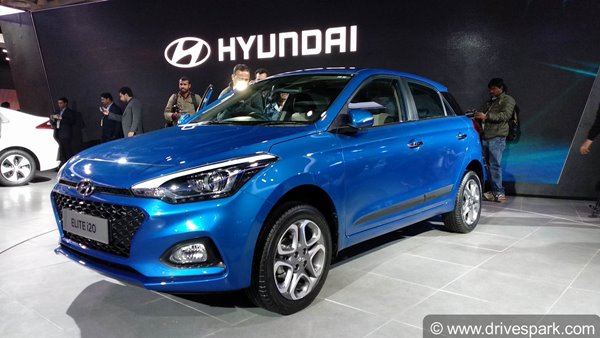
The car now gets the customary ‘cascade’ design front grille that stretches out at the corners. While I did think it was forced on the Grand i10, Xcent and Verna, it looks rather nice on the i20, especially how it is finished in black. The fogs and headlamps are also new, and yes get the daytime running LEDs. The rear is where the biggest change has happened. The license plate has moved from the bumper up to the tailgate, which is completely redesigned.
The rear lights also have a new shape and lighting pattern. Hyundai had already begun offering the two-tone option with a black roof earlier, and that continues, though you do get a new orange colour. The dual tone black roof is on offer with the deep red, orange and white paint options only. You get new 16-inch wheels, which are available only on the top spec Asta and Asta Option, variant. And the must-have chrome door handles which add that premium touch on the car – or so am told!
There are some key changes on the inside too of course but lets get to that in a bit. The car that I’m driving today is the top-spec diesel variant of the i20 facelift with the manual gearbox. Hyundai claims to have given the car’s performance a boost by reworking both powertrains. And interestingly enough the numbers remain exactly the same! (see output figures table below). There is no perceptible difference in the car’s drive feel to be honest, even though Hyundai says the performance is meant to be punchier. Air curtains have been added to the car to enhance fuel efficiency – which the company says is up by 9 per cent. The car retains kits good ride quality and handling. I liked the way the manual gearbox felt earlier, and that’s true now too. The steering has been tightened up a bit, and I find it a bit more precise than before. Though it is not as nice as the new Verna’s.
Dual airbags have been standard of course, and the top end gets the segment best 6 airbags. ISOFIX child seat restraints and ABS also are a good inclusion. In fact Hyundai cars are always known for having a comprehensive list of features and so it continues on the inside. There’s a new touchscreen infotainment system; now a 7-inch unit that responds better to touch inputs than the previous screen. Like earlier, there is smartphone integration in the form of MirrorLink, Apple CarPlay and Android Auto. Apart from that there are subtle tweaks to the upholstery as well. At the rear there is now a drop-down armrest – a nice touch.
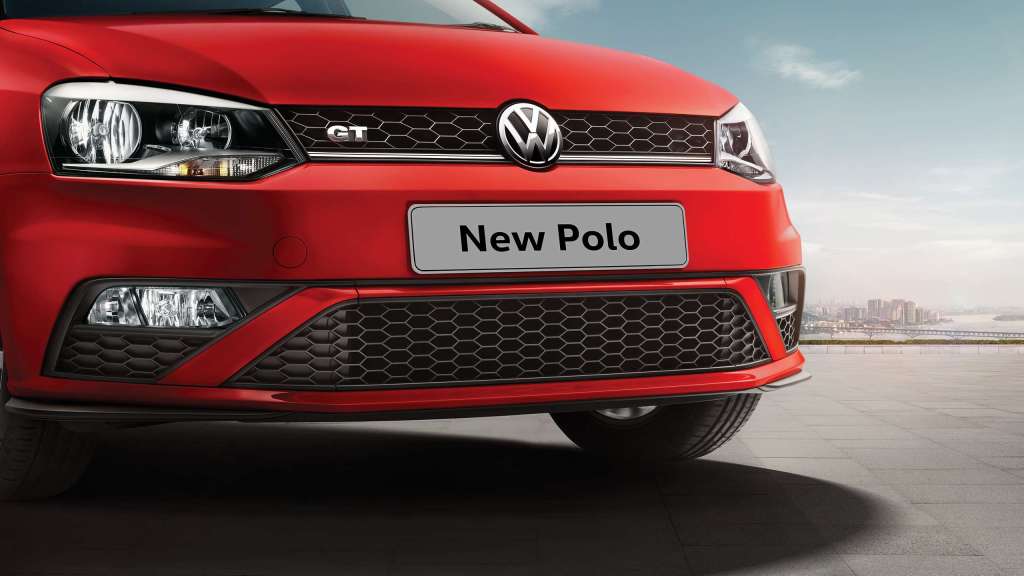
At a time when other manufacturers are introducing new-generation models of its cars, Volkswagen India is content with bringing in another facelift. With mild updates to its exteriors and interiors, and a new paint scheme, this is the ‘new’ Volkswagen Polo GT TSI. It gets the same engine-drivetrain combo and a similar equipment list too. So, is the new Polo GT any different? Let’s find out.
The Polo GT is known for its understated styling, and the facelift version is no different. Sure, it is the quintessential old-school sleeper car, but the design changes won’t wow you. So, you get a tweaked GTI-like front bumper with a black front skirt and honeycomb mesh pattern for the grille. In profile, the car comes with new 16-inch ‘Portago’ alloys, blacked-out ORVMs and a side skirt.
Updates to the back includes a new black spoiler, reworked rear bumper with a diffuser and slightly revised taillights. What’s more, you also get a GT Line trim, which comes with a black roof, door foils and a ‘GT Line’ badge on the front fender. And did we say it also gets a new colour option? Yes, the new Volkswagen Polo GT is now available in the Sunset Red paint scheme.
This is an example post, originally published as part of Blogging University. Enroll in one of our ten programs, and start your blog right.
You’re going to publish a post today. Don’t worry about how your blog looks. Don’t worry if you haven’t given it a name yet, or you’re feeling overwhelmed. Just click the “New Post” button, and tell us why you’re here.
Why do this?
The post can be short or long, a personal intro to your life or a bloggy mission statement, a manifesto for the future or a simple outline of your the types of things you hope to publish.
To help you get started, here are a few questions:
You’re not locked into any of this; one of the wonderful things about blogs is how they constantly evolve as we learn, grow, and interact with one another — but it’s good to know where and why you started, and articulating your goals may just give you a few other post ideas.
Can’t think how to get started? Just write the first thing that pops into your head. Anne Lamott, author of a book on writing we love, says that you need to give yourself permission to write a “crappy first draft”. Anne makes a great point — just start writing, and worry about editing it later.
When you’re ready to publish, give your post three to five tags that describe your blog’s focus — writing, photography, fiction, parenting, food, cars, movies, sports, whatever. These tags will help others who care about your topics find you in the Reader. Make sure one of the tags is “zerotohero,” so other new bloggers can find you, too.

 Burning Techometer